Backpacking Across China 2 - Peking University and Beijing
Jul 30, 2026
5 minute read
This July, I got the opportunity to study at Peking University. My invitation to the second-largest university in China was the catalyst for this entire trip.
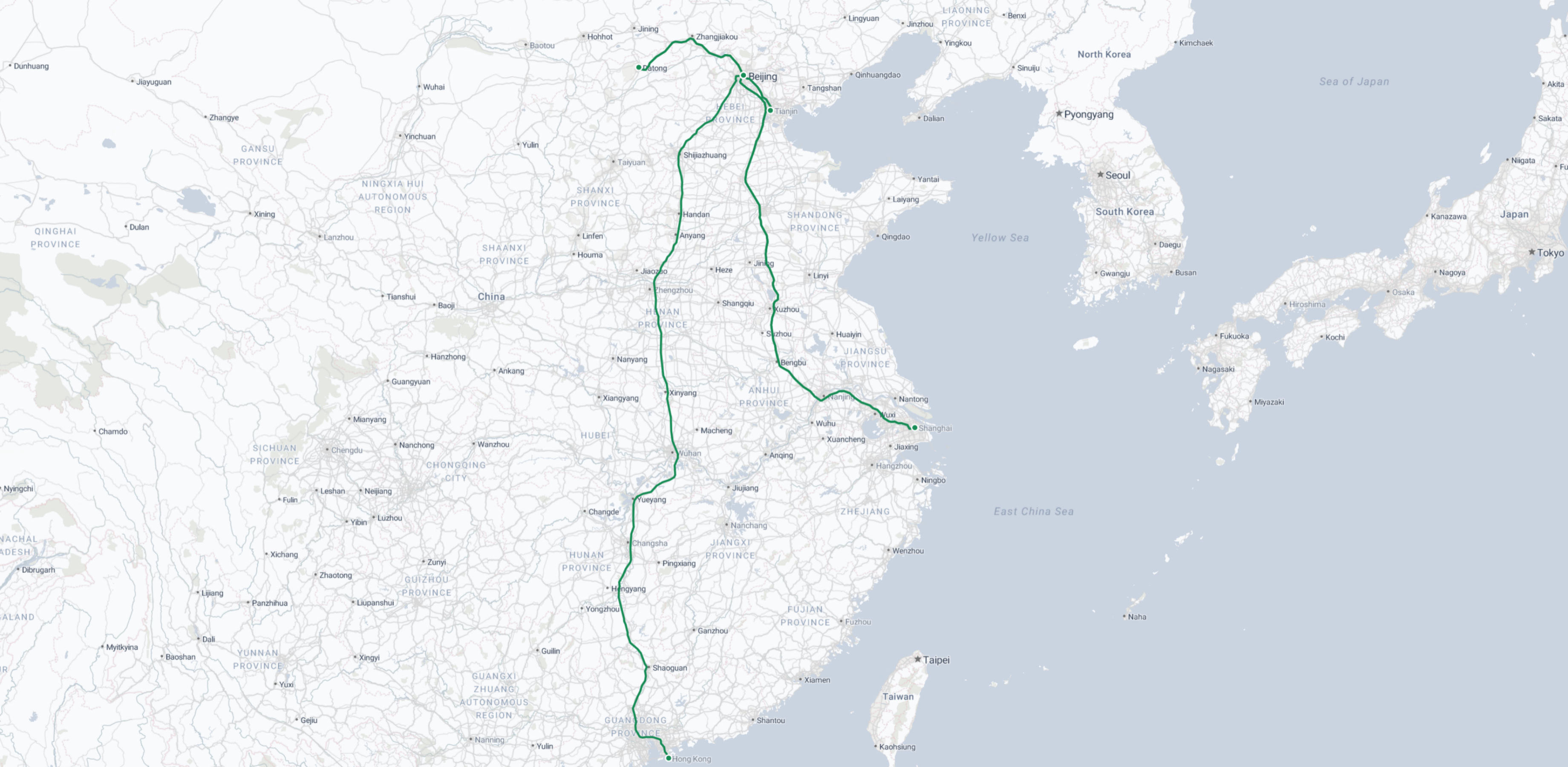
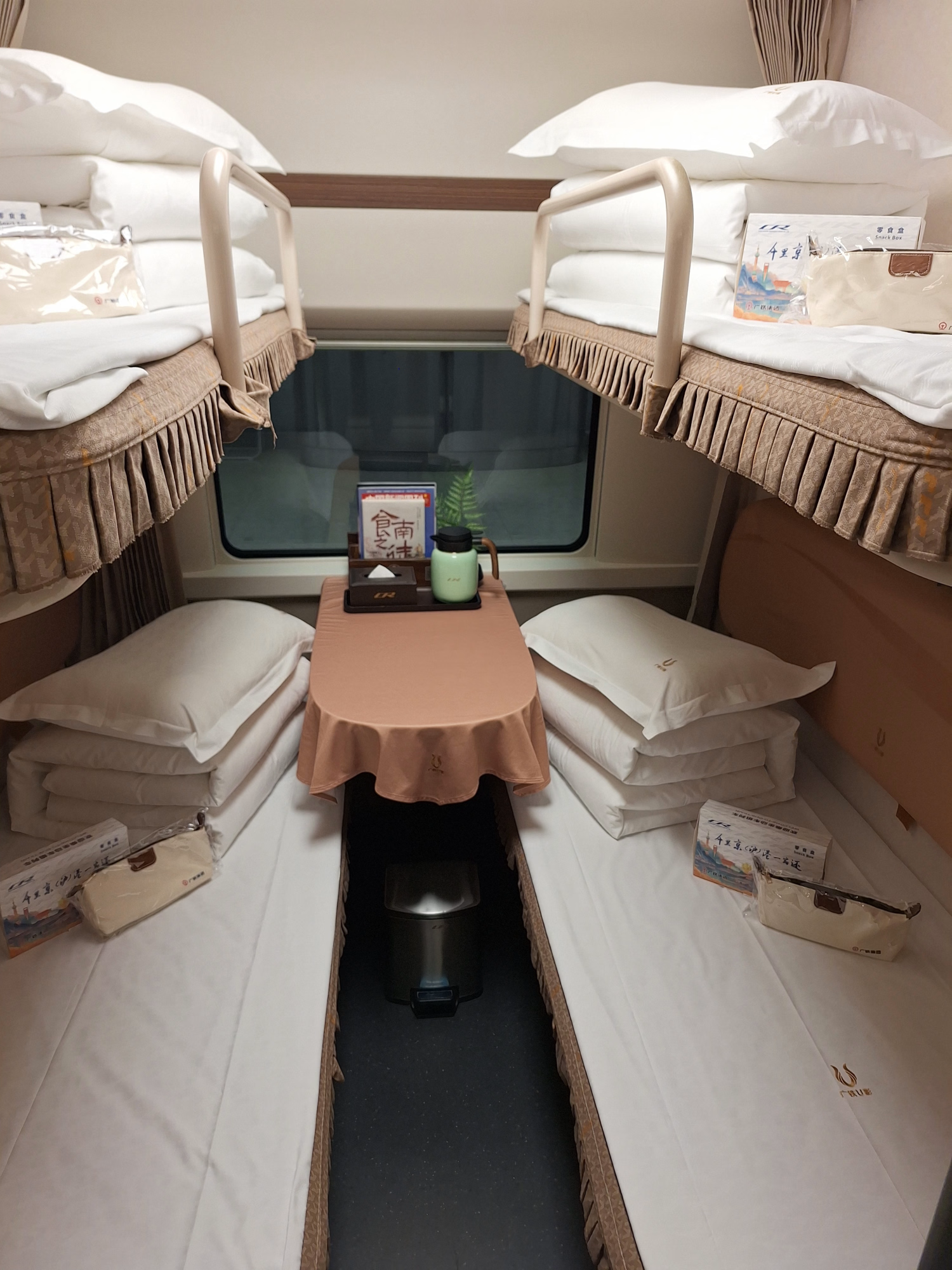
After visiting Hong Kong, I rode an overnight sleeper train all the way to the capital.
Beijing 北京
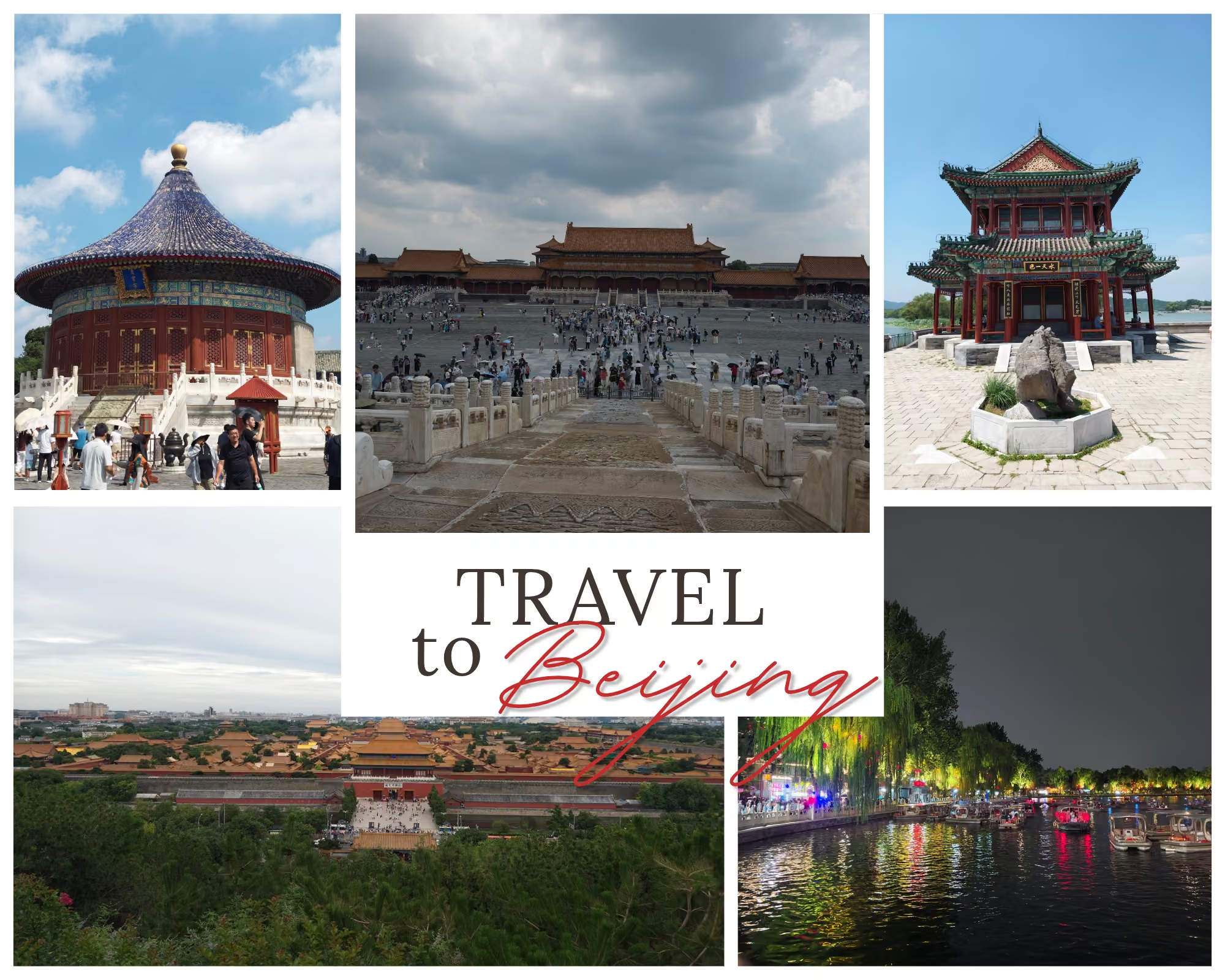
A massive city in its own right, my month-long stay gave me the time to slowly explore the city one alleyway at a time. Not to sound like a generic travel guide, but Beijing truly felt uniquely different from Guangzhou and the rest of China. Ancient alleyways, palaces, and temples mix with modern administration buildings, massive transit networks, and a bustling commercial scene along major streets.
I came to appreciate Public transit, especially while city hopping with nothing but a backpack and no car. I really came to appreciate how extensive public transit was in every city, large or small. I would not have been able to see a tenth of what I visiting if it wasn't for the subways and beijing's bicycle network. Cycling in Beijing actually was my favorite out of all cities, which I'll go into with my time at PKU.
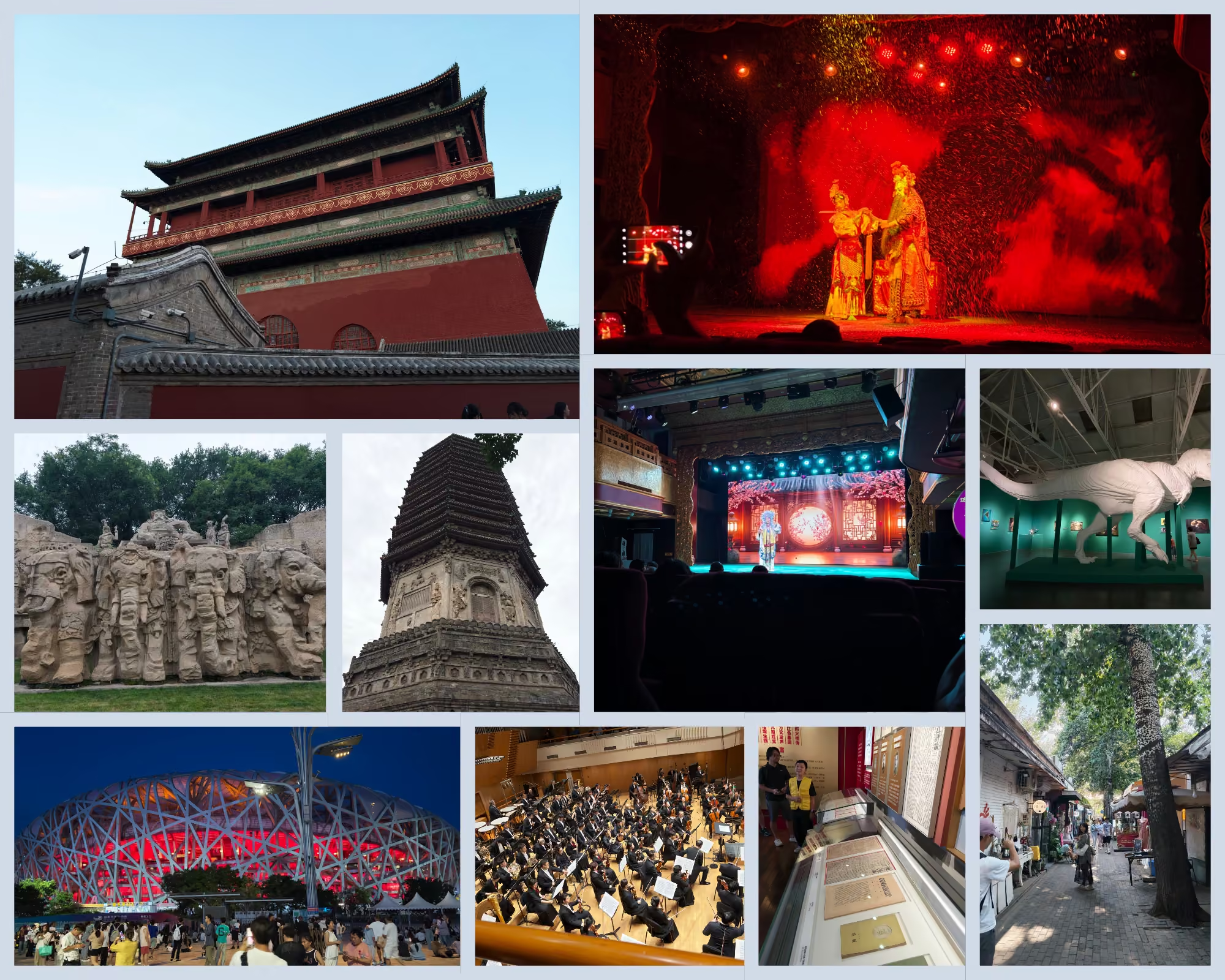
Parks and Lakes
Beijing is filled with so many historical green spaces and parks. One of my first visits was outside the northwest of the city, where I had almost the entire park to myself. Admittedly, this was on the way to the Summer Palace - definitely one of the more famous lakes.
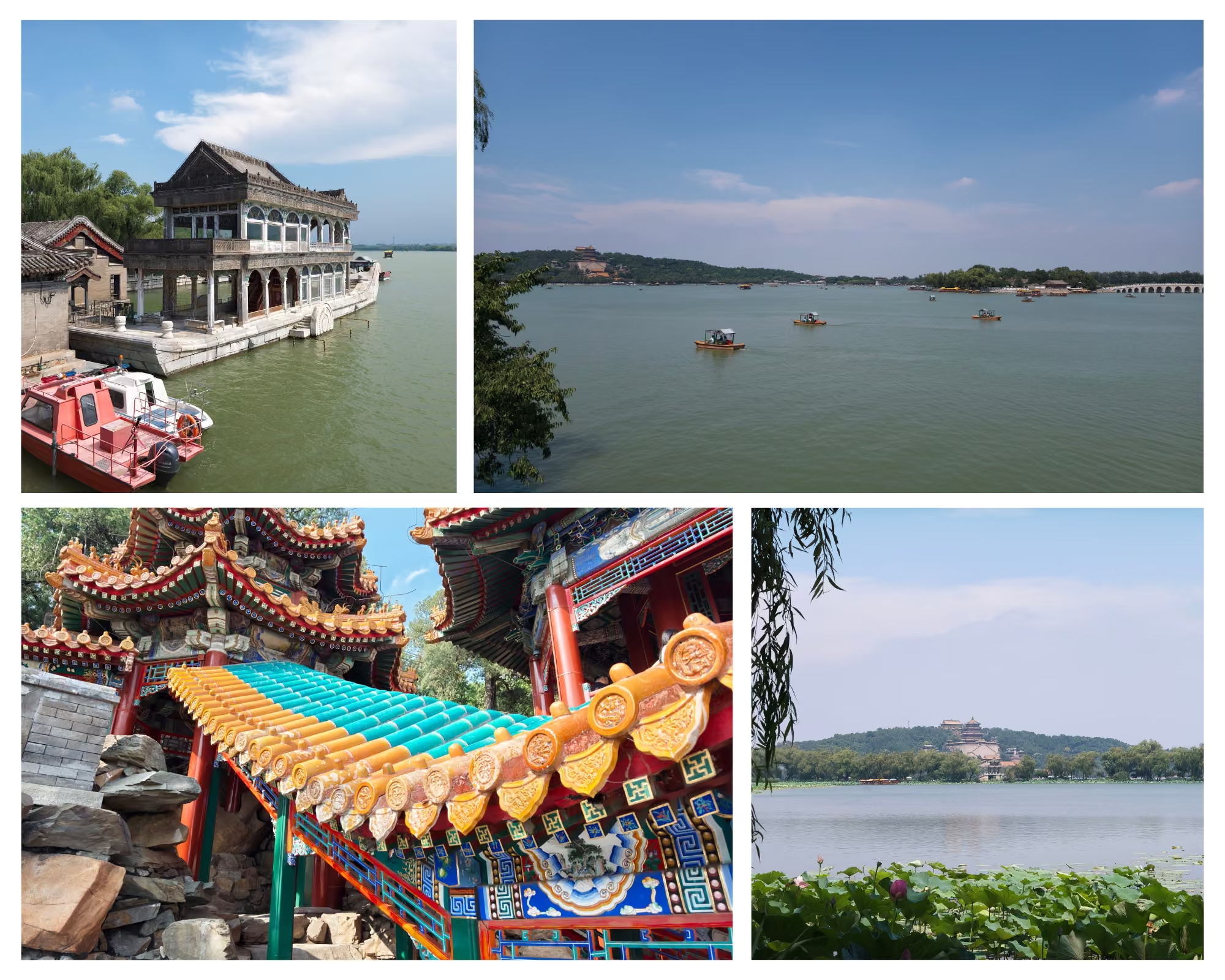
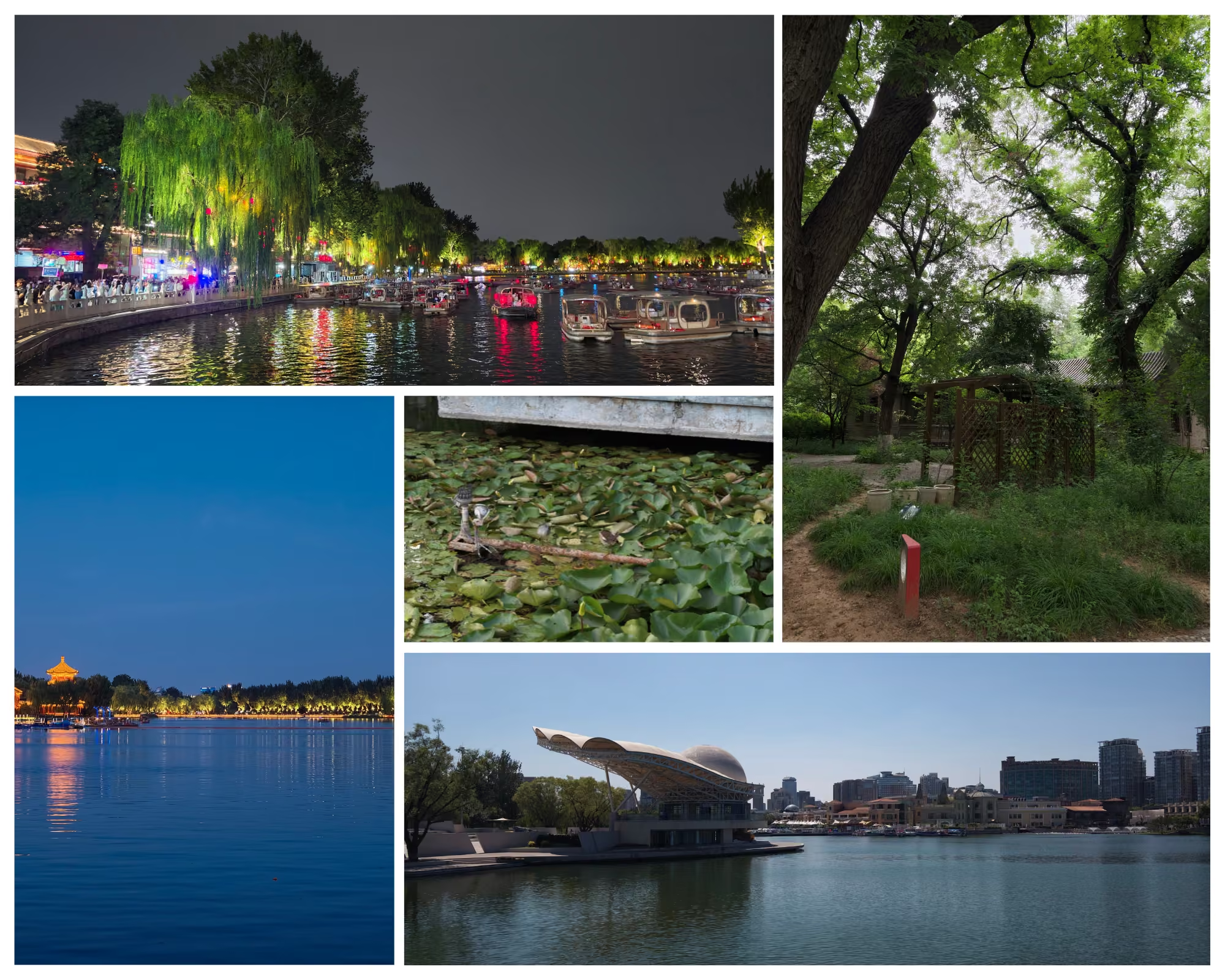
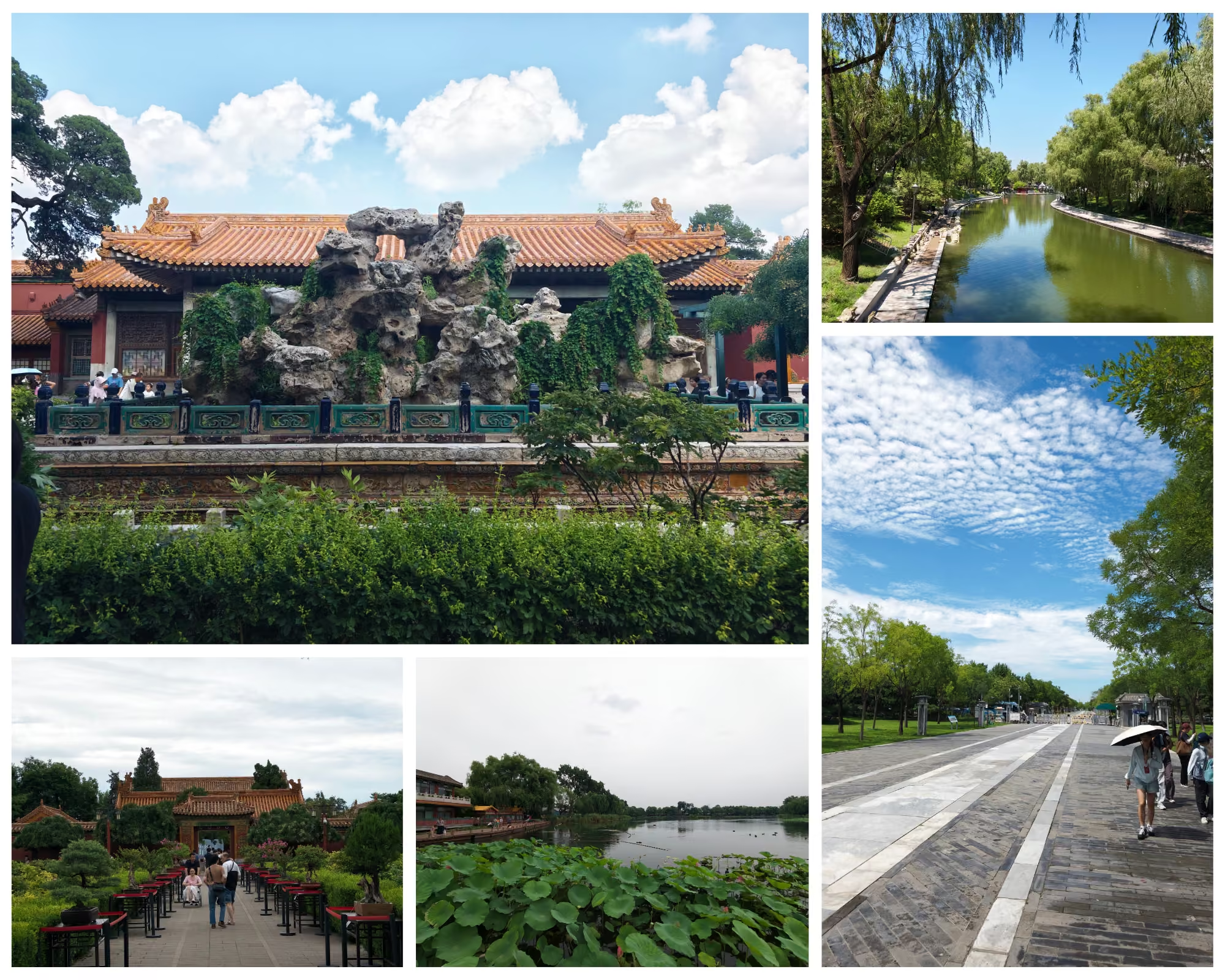
The inner city, especially around the ancient capital, is filled with lakes and public parks. Some of my favorite spots include Jingshan (景山) Park overseeing the Imperial Palace, Beihai (北海) park with a massive lake of lotus and wildlife, plus all the integrated urban parks. The Temple of Heaven and Olympic Park were my favorite.
Culture and Nightlife
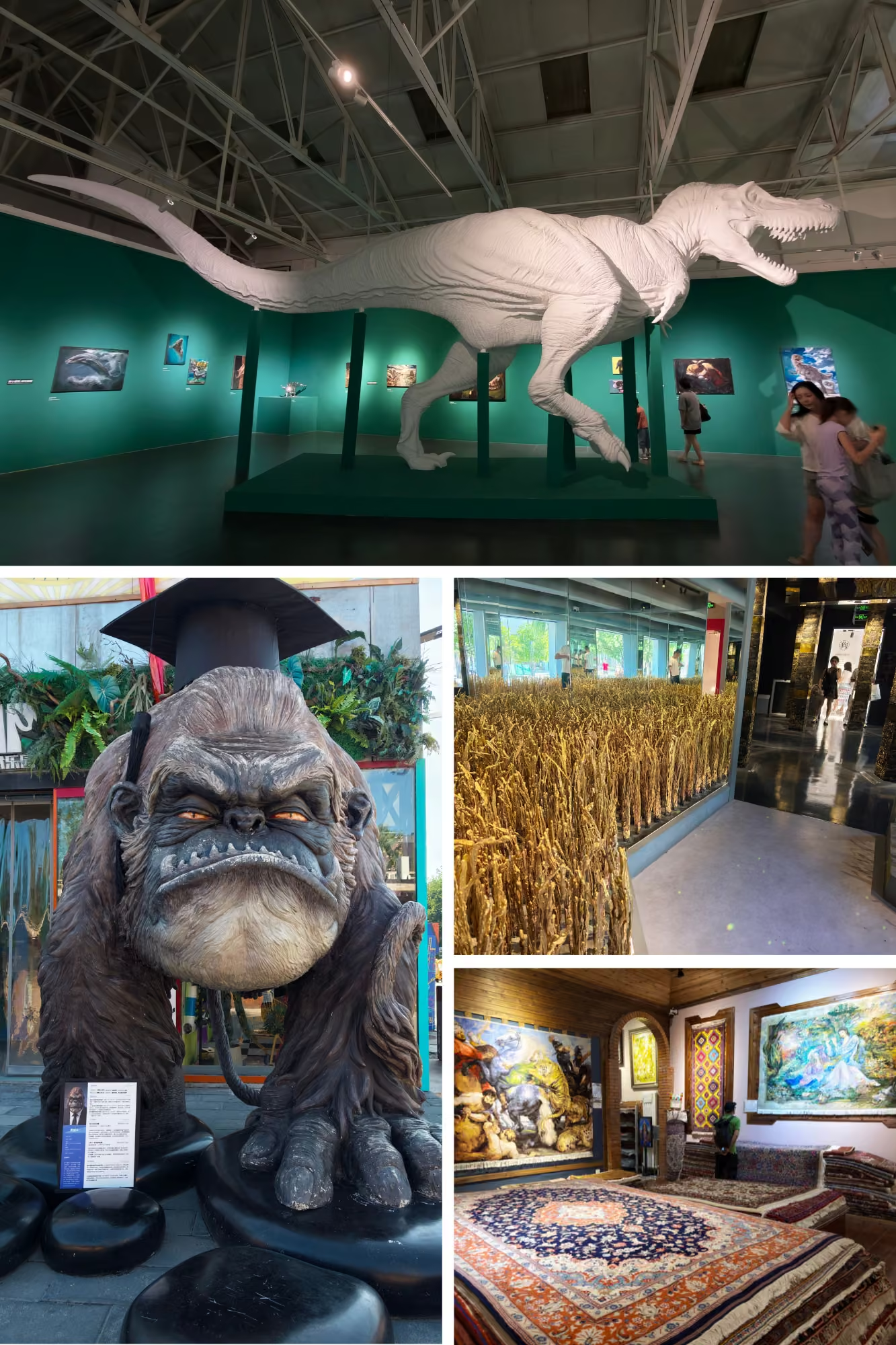
A dedicated art district is filled with independent art exhibitions, museums, and fashion designers. Personally, I didn't enjoy my visit as much; I could appreciate the urban aesthetics and all the artists trying to make a name for themselves
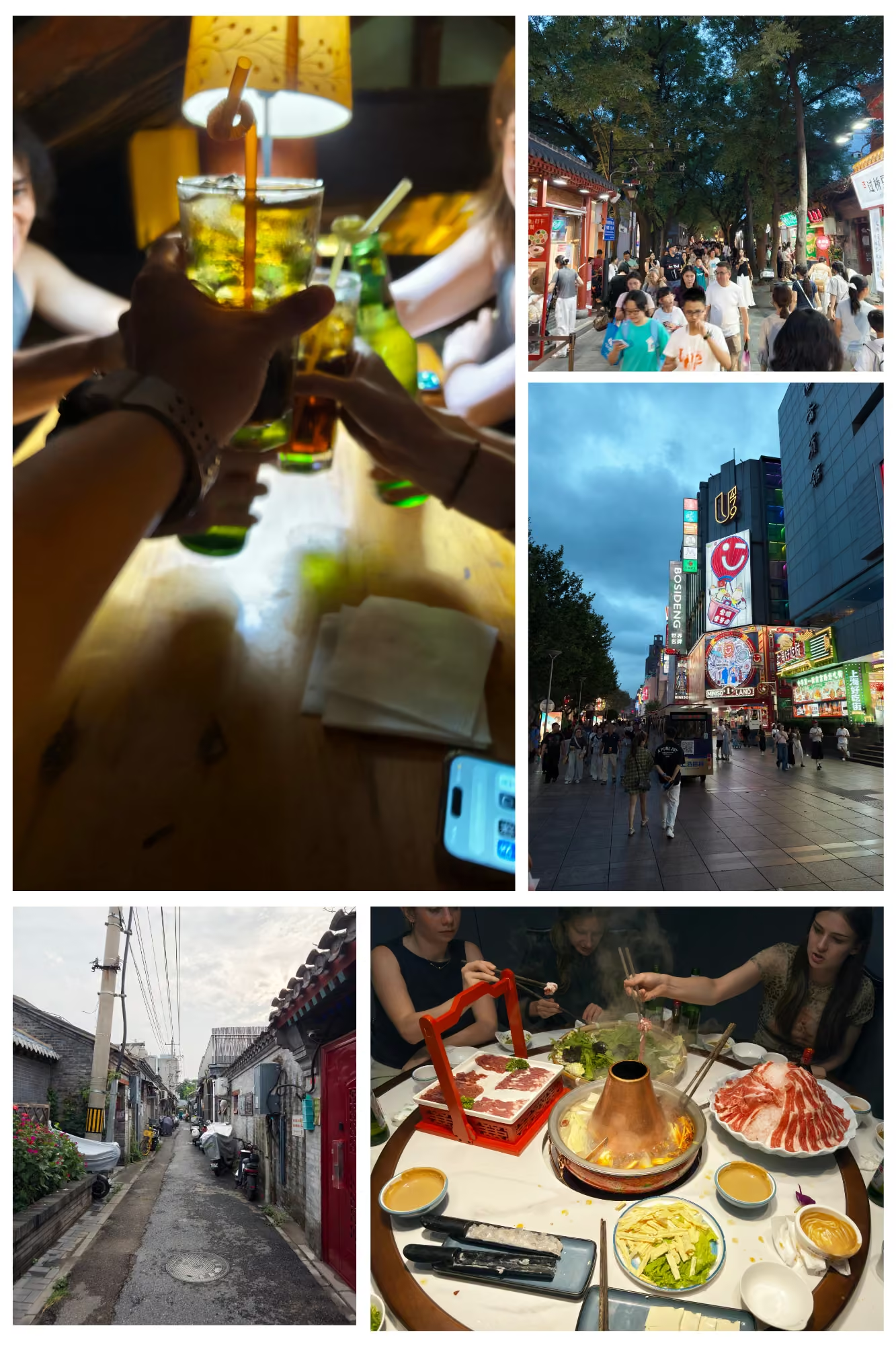
Shichahai (什刹海) was my favorite park, but I see it more as a bustling commercial tourist spot. A beautiful spot when it's not busy, with a long history attached to it. My first impression was actually at night, when bars light up the waterfront and food vendors line the street.
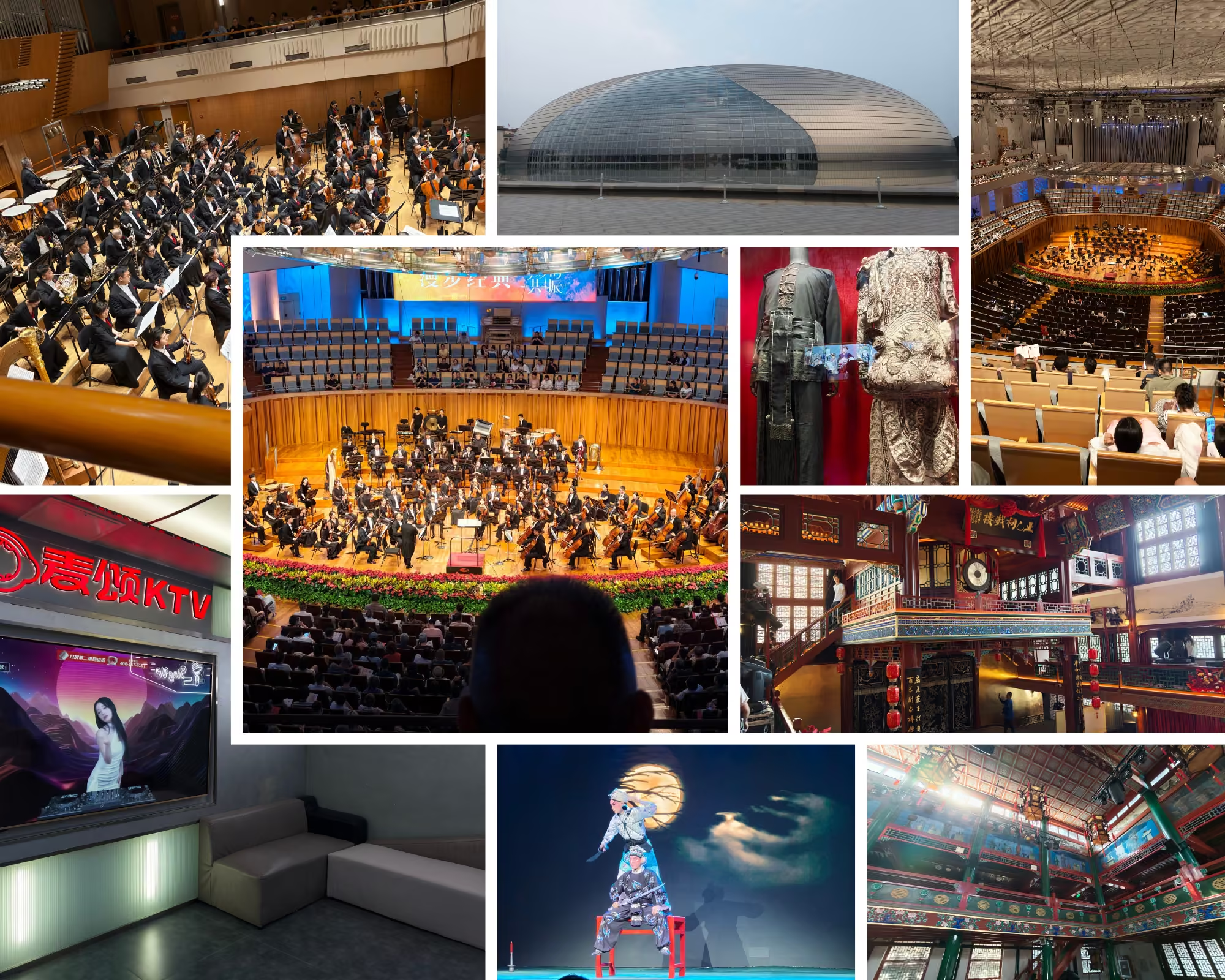
Chinese stage dramas, Peking opera, and symphony orchestras were a great contrast to unwind and absorb myself into Beijing culture. After some finagling with ticketing apps, I got to watch Beijing's big two orchestra's, the CNSO and NCPAO, perform Mahler live. I even watched a Peking Opera performance we were studying in class! Also, the NCPA building next to Tiananmen (天安门) Square is awe-inspiring to see up close.
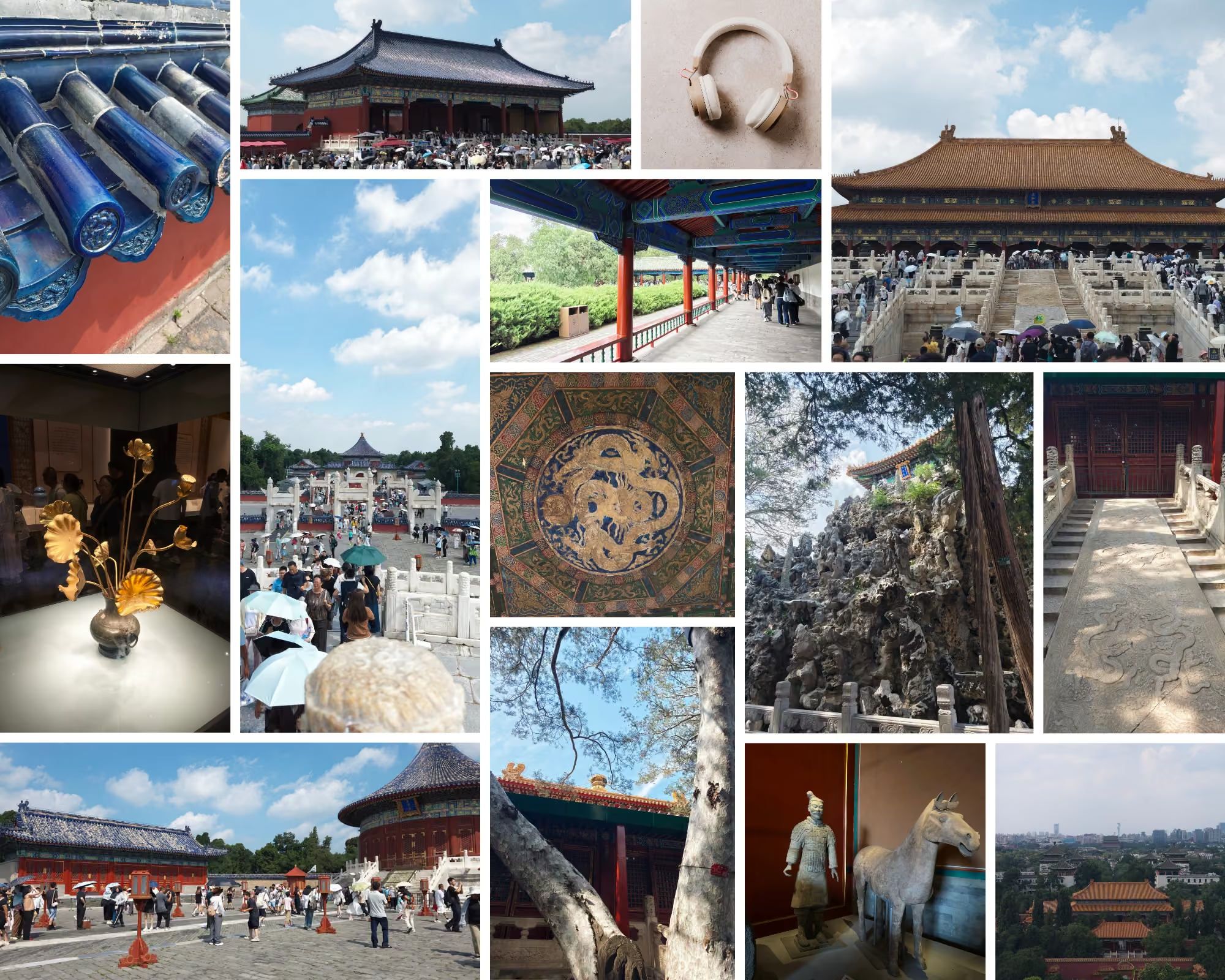
Central Axis
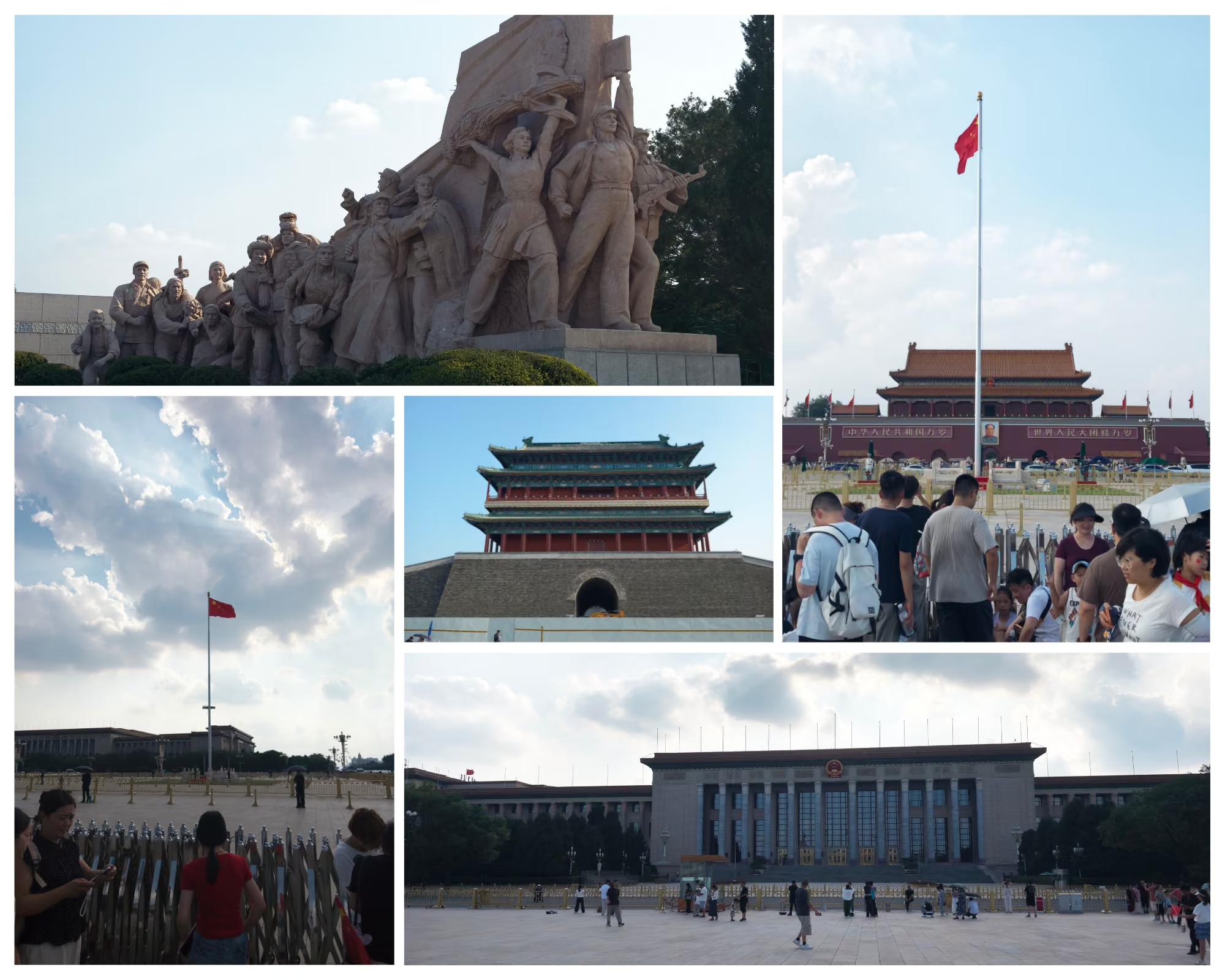
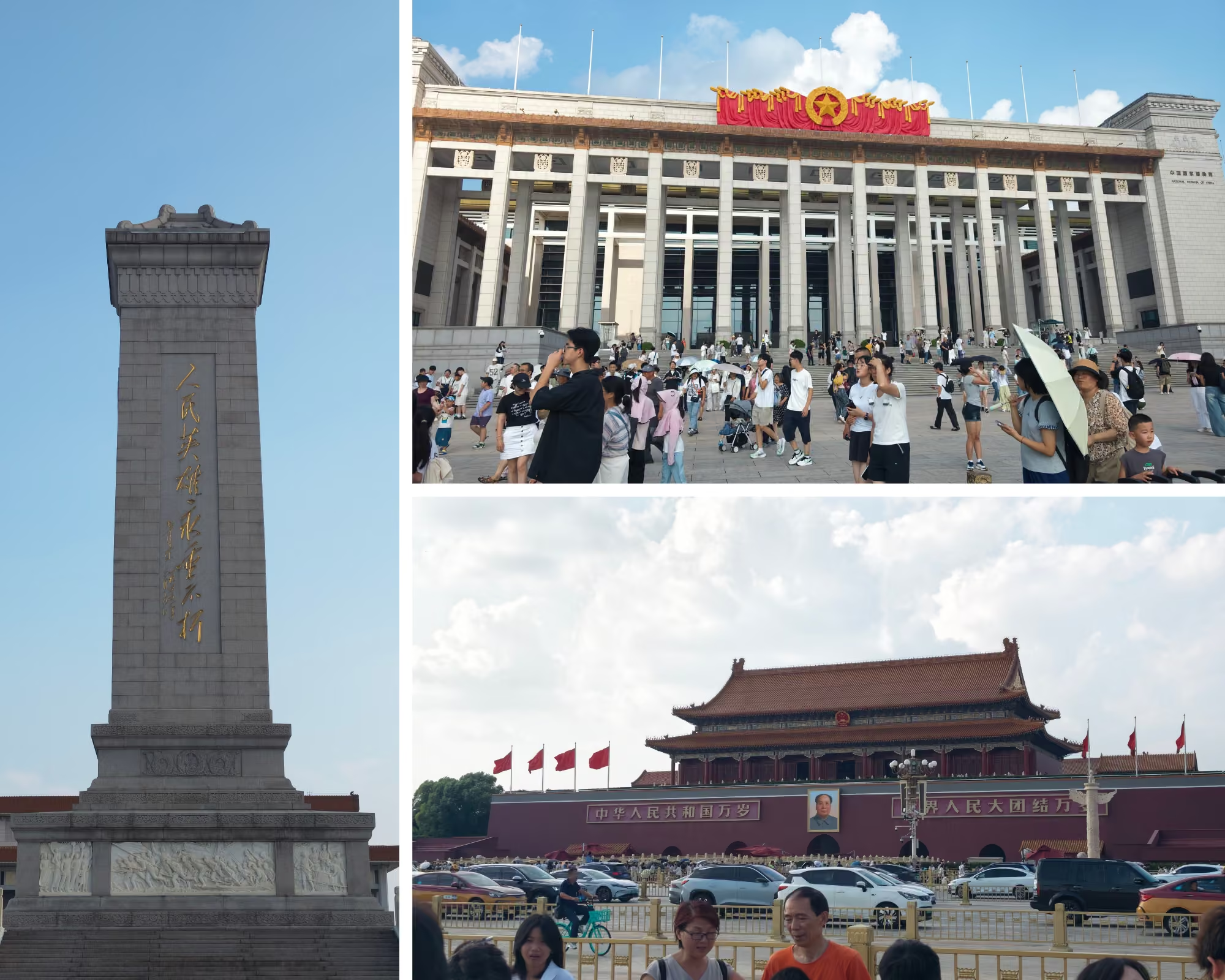
I made sure my visit ended with the central axis. From the old southern gate to the northern gate, we pass through the Temple of Heaven (天坛), Tiananmen Square (天安门广场), and the Palace Museum (故宫博物院):
Food
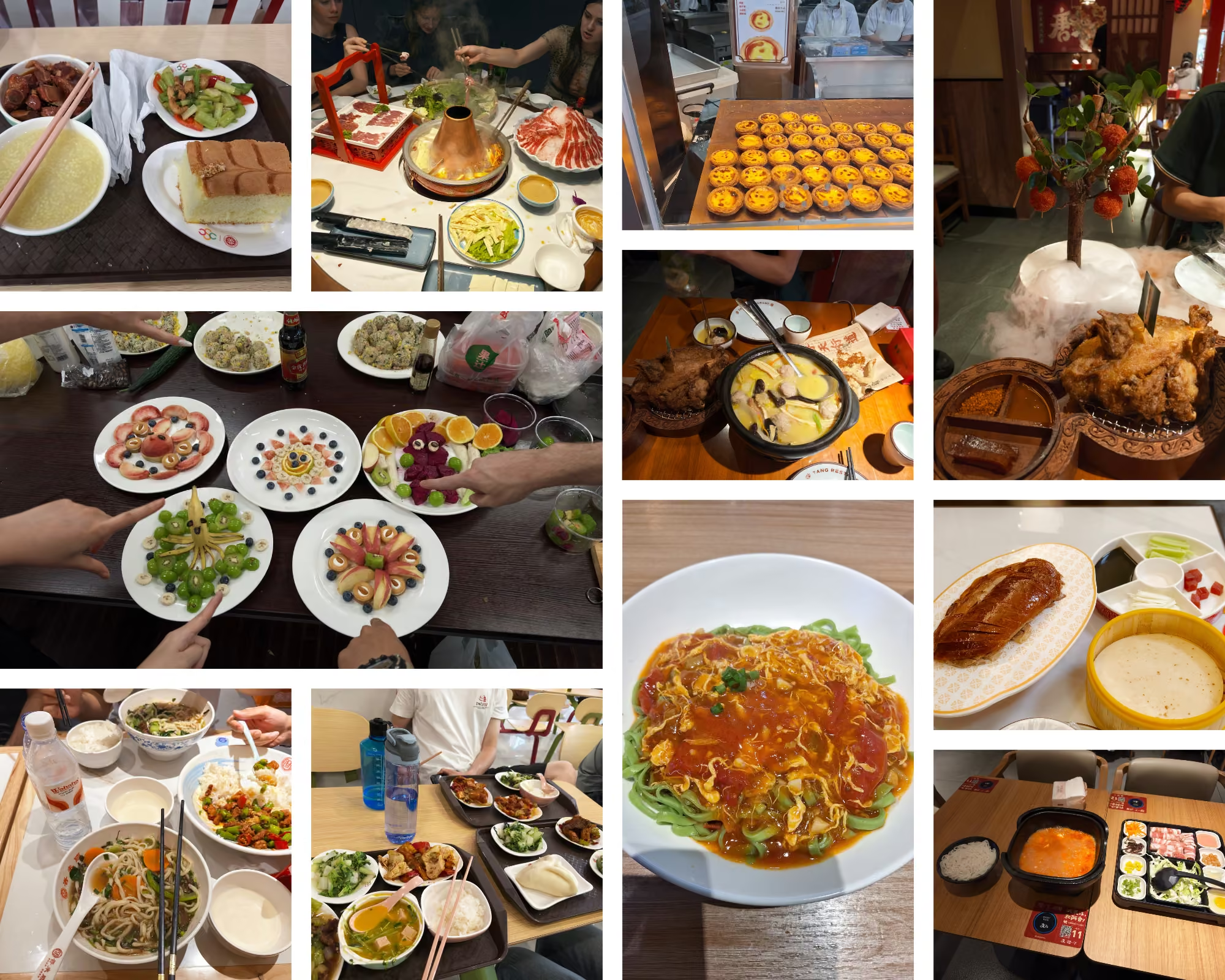
From cheap campus lunch to street noodles and luxury Peking duck and hotpot, there was so much to eat that I probably only scratched the covering of the surface of what there is to sample:
Peking University
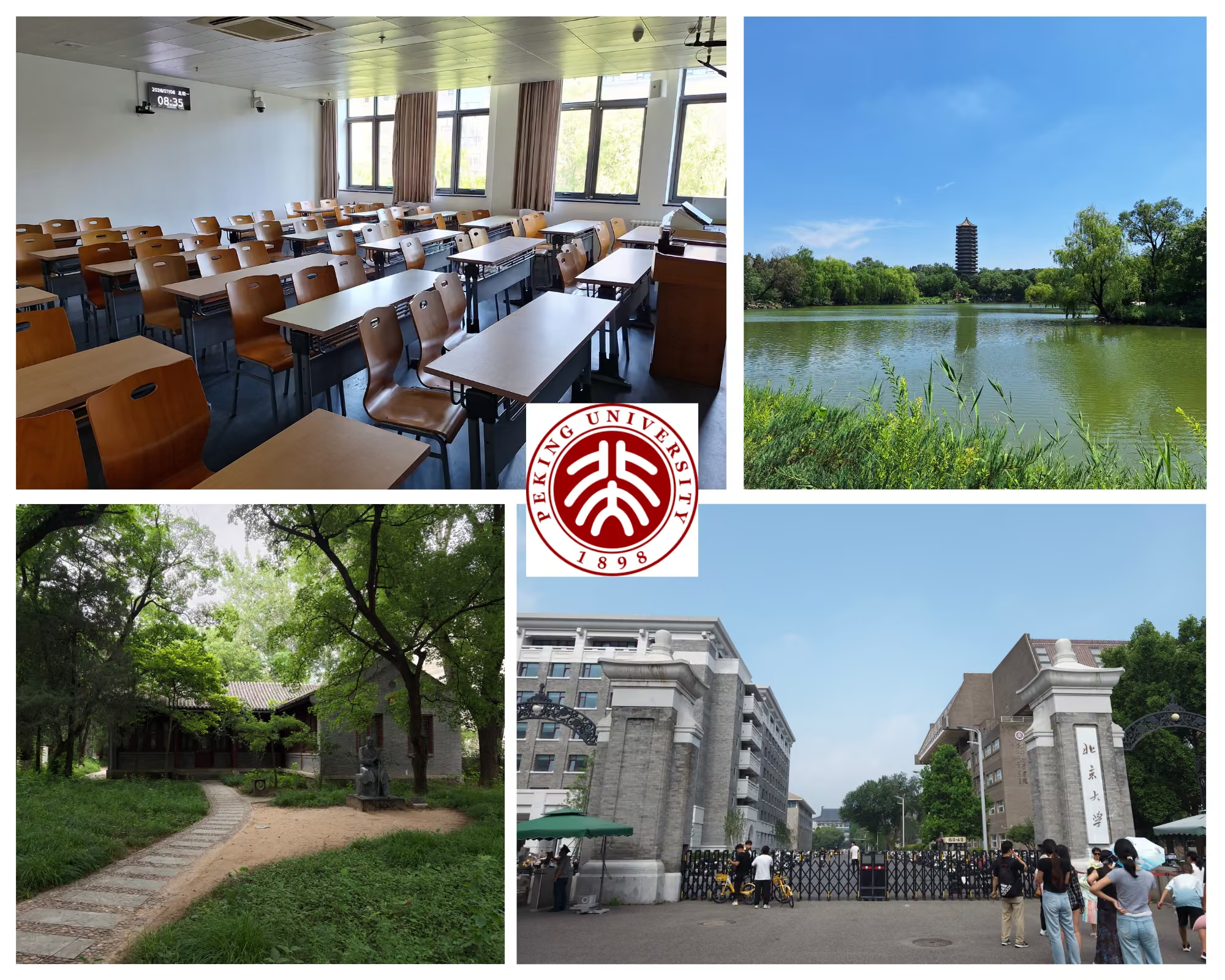
Founded in 1898, Peking University stands as a symbol of changing educational ideology. After the fall of the imperial dynasty and the formation of the new republic, PKU was heavily involved in pivotal turning points of 20th-century China. See the May 4th Movement, the war against Japanese aggression, the Cultural Revolution, and up to today, Nobel Prize research and the most successful entrepreneurs.
Anyways, my opportunity to study here let me both explore the campus and meet a lot of awesome exchange students (I miss yall besties~):
A special shout-out to my professors! Studying contemporary fiction through novels and film with Dr. Ma Naiqiang was an incredibly eye-opening class on what I feel is an especially underrepresented and misunderstood period of 1900s China. Like appreciating local cuisine, exploring authentic ideas and critique across the new Republic, Japanese war, Civil War, and People’s Republic was fascinating to learn about.
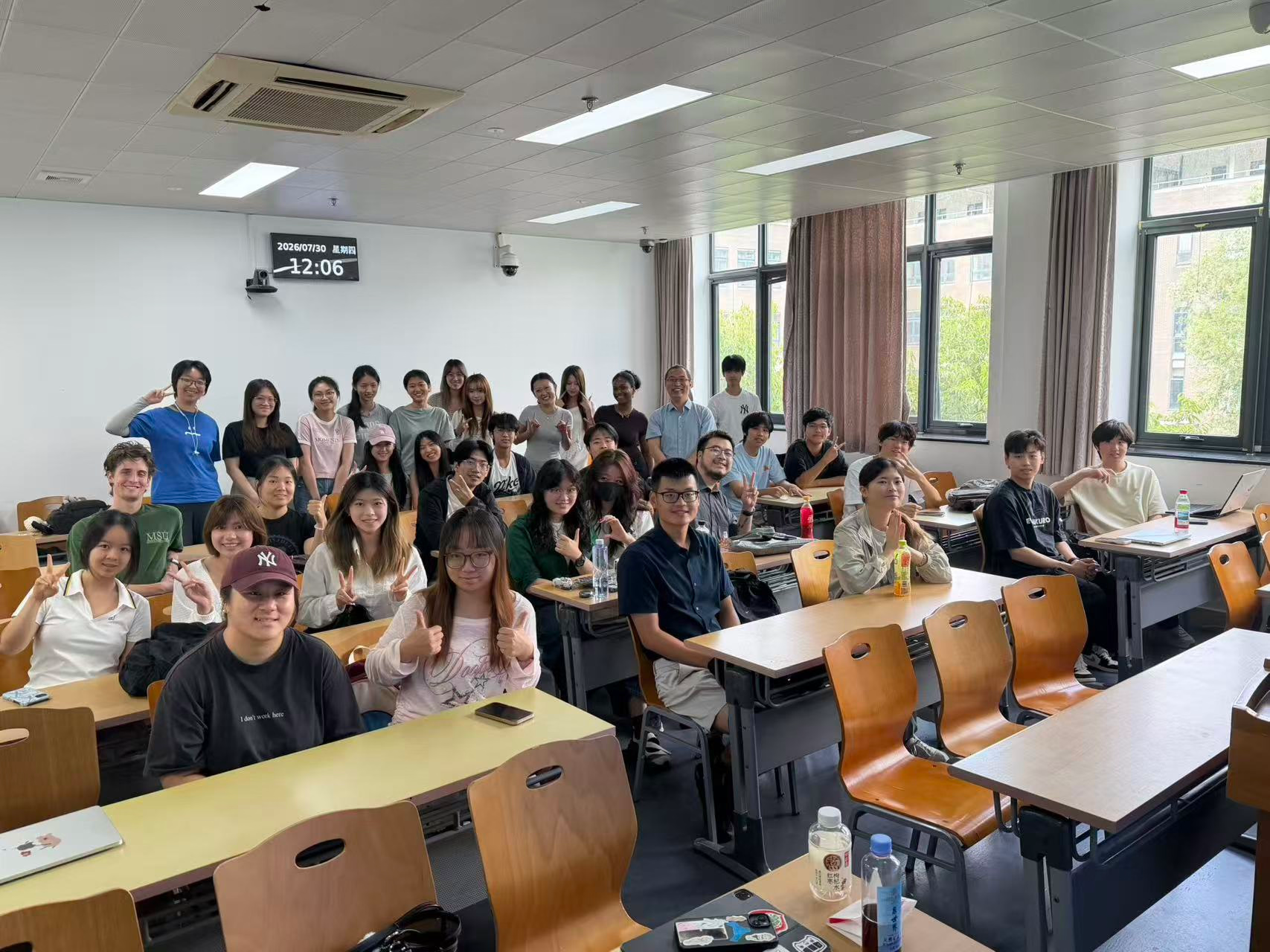
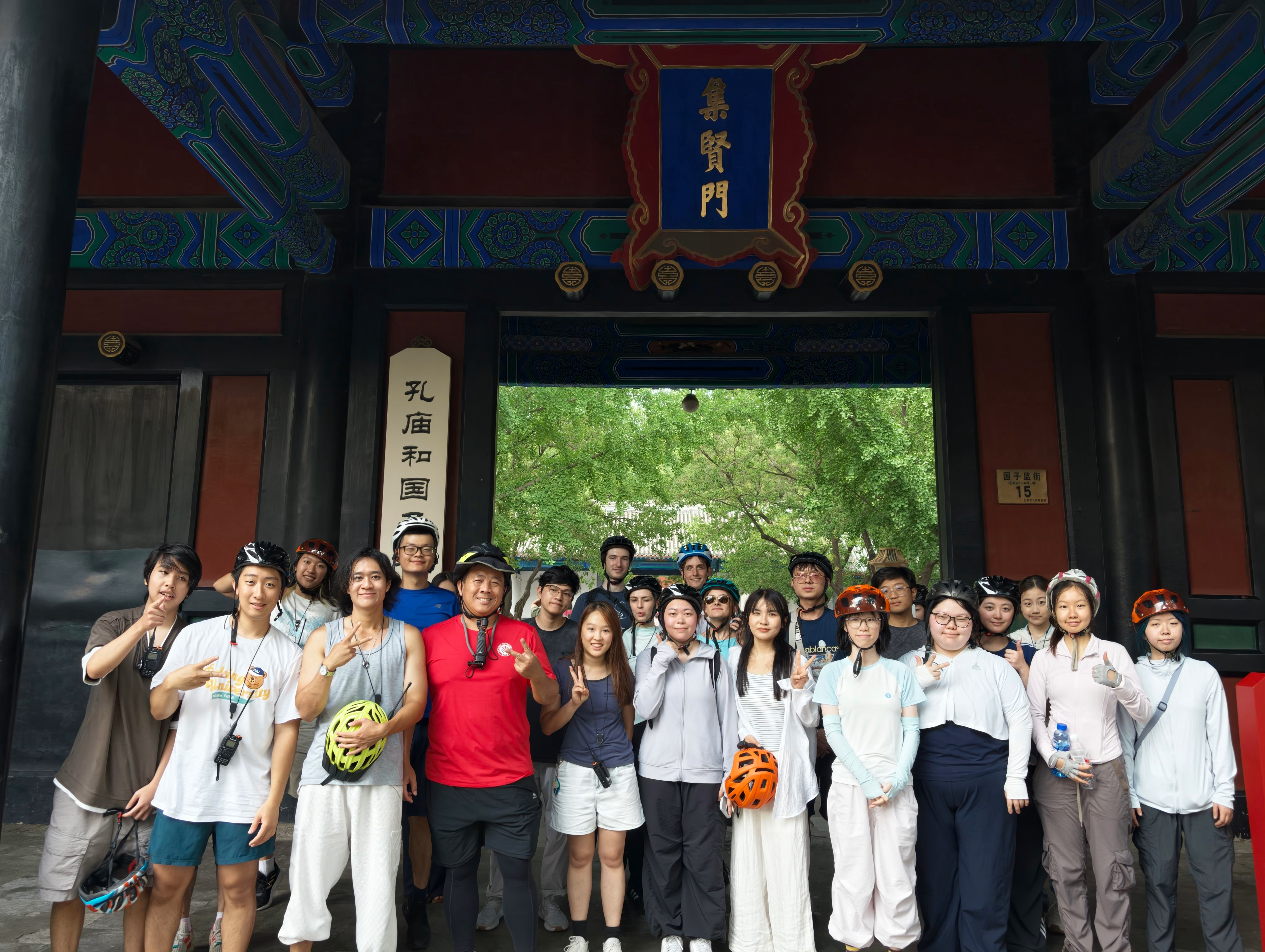
And thank you, Dr. Fuquan Lu, for leading the best cultural immersion class ever by cycling around Beijing! Traveling along the former ancient walls, exploring old Opera houses and museums, and our final 7-hour, 45KM trip around the second ring road! Cycling amongst the locals really gave me a deeper appreciation of daily life, urban design, and how much I love biking as my commute.
Out of City Day Trips
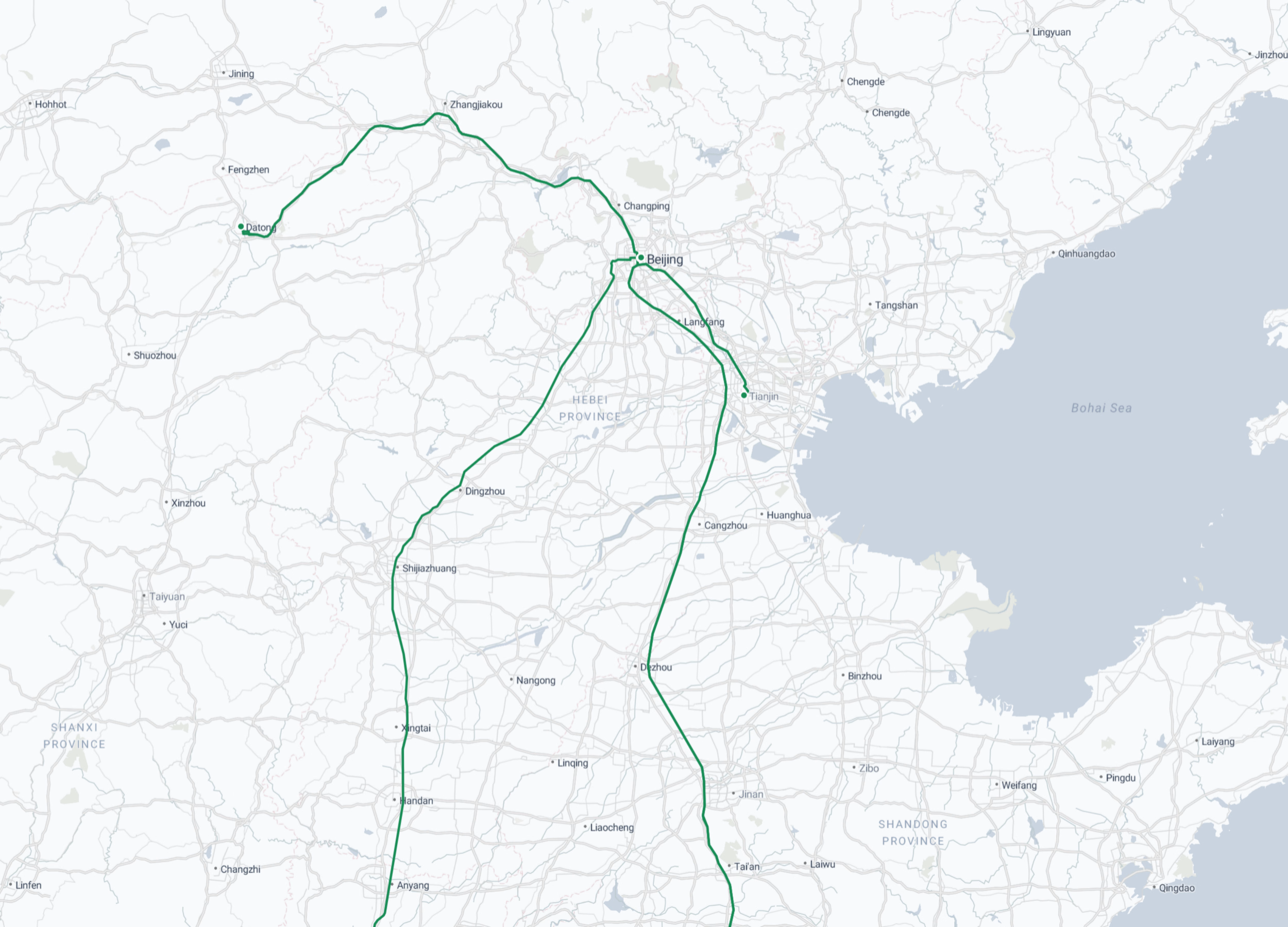
Because of course I couldn't waste my weekends lounging around the hostel. Each weekend, I was riding trains to nearby cities and exploring as much as I could.
My first visit was a double dip to Shanghai for Bilibili World 2026. Read more about this in part 3. Excluding this, my two other cities were much closer in distance, and very different from metropolitan Shanghai/Beijing.
Datong 大同
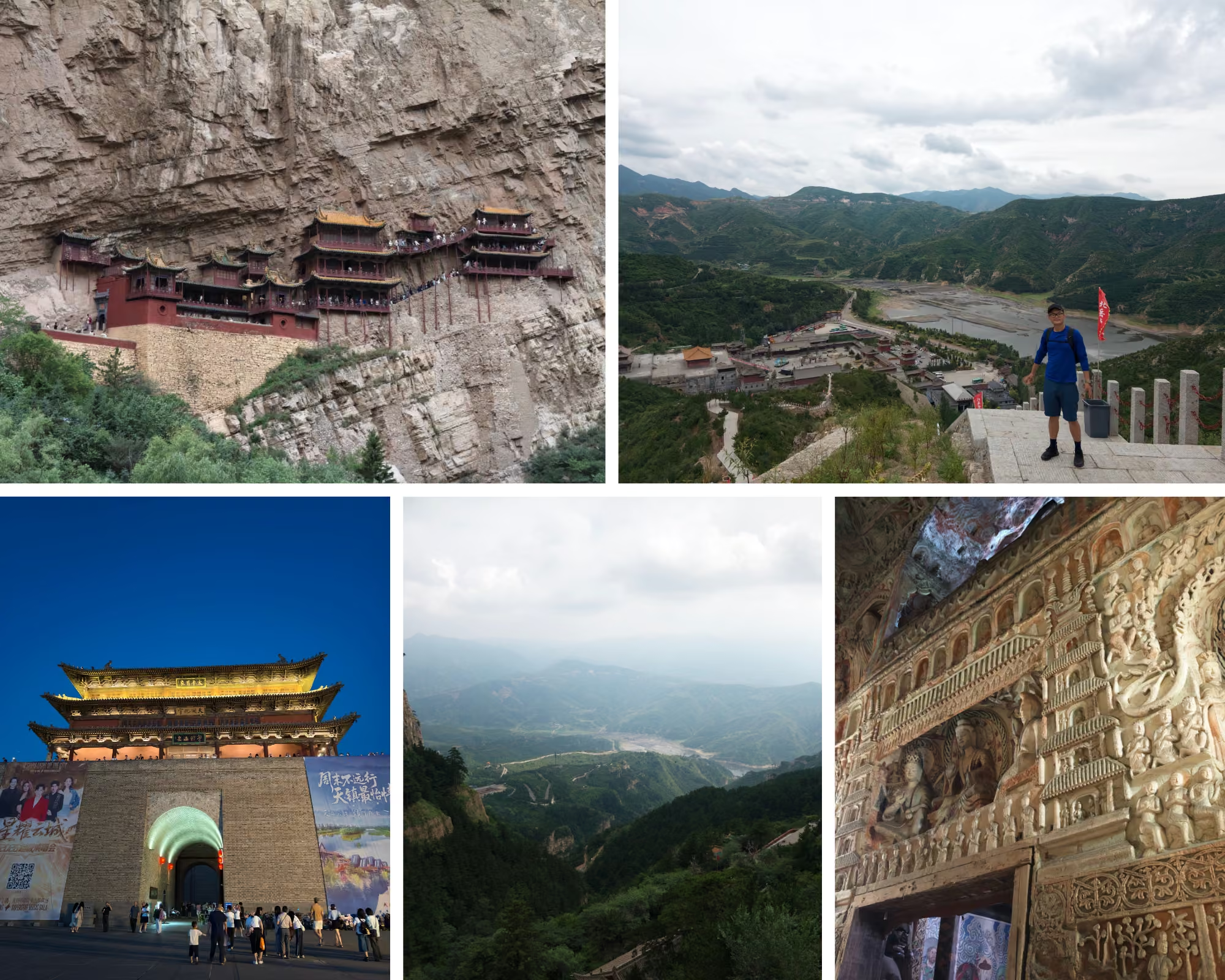
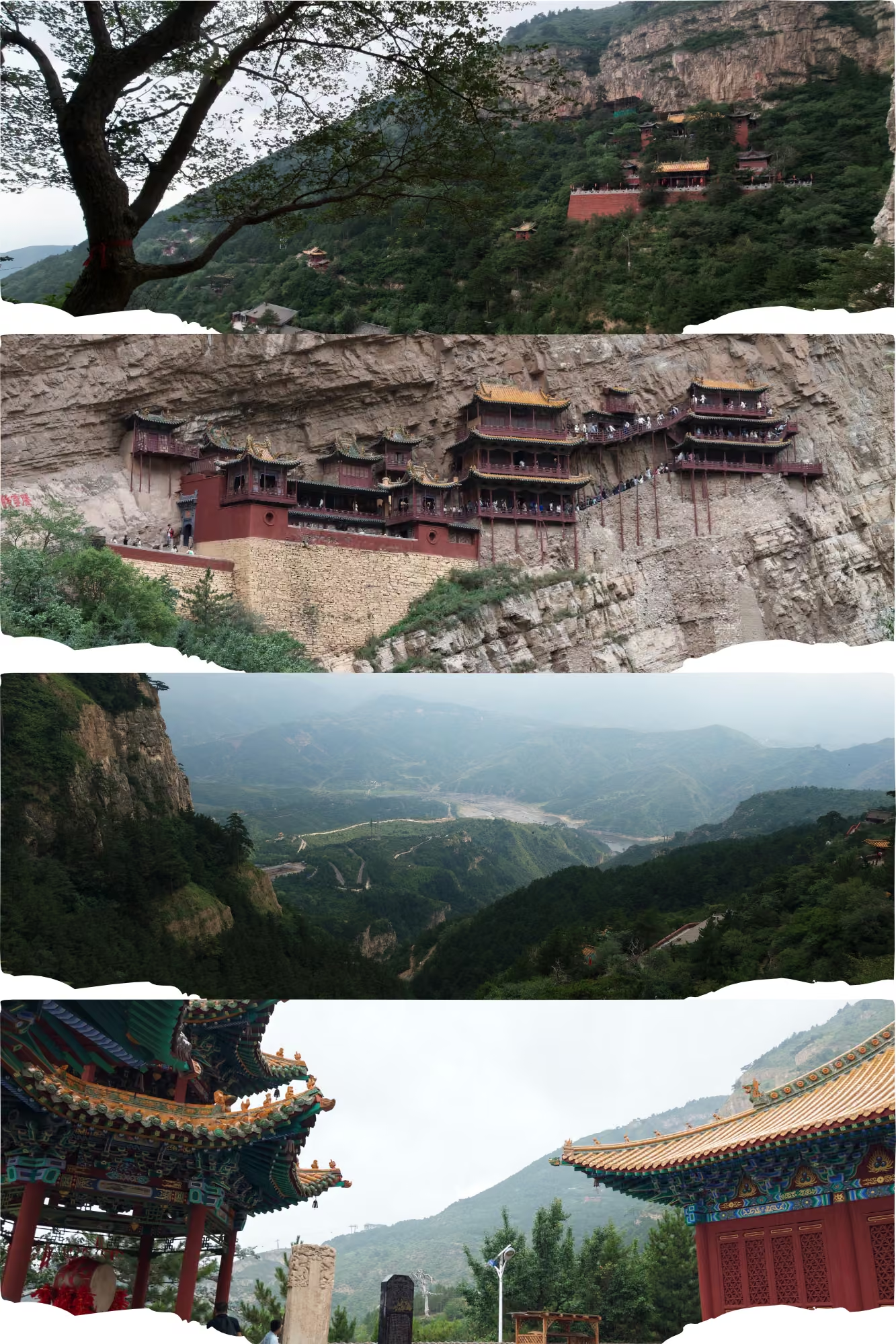
A very famous destination for its Buddhist cave carving, hanging temples, and holy Huangshan (黄山) mountain. Arriving in the early morning, I imminently take a tourist bus to see the hanging temple. Carved into the side of a valley, this attraction is really popular, and the line to climb up is even longer.
Afterwards, I continued riding the tour bus to the base of Huangshan. This is another holy mountain, lined with stone carvings and majestic buddhist temples carved into the mountain and overseeing the plains below. The view accompanying me to the top already made it worthwhile; the peak only made it more satisfying:
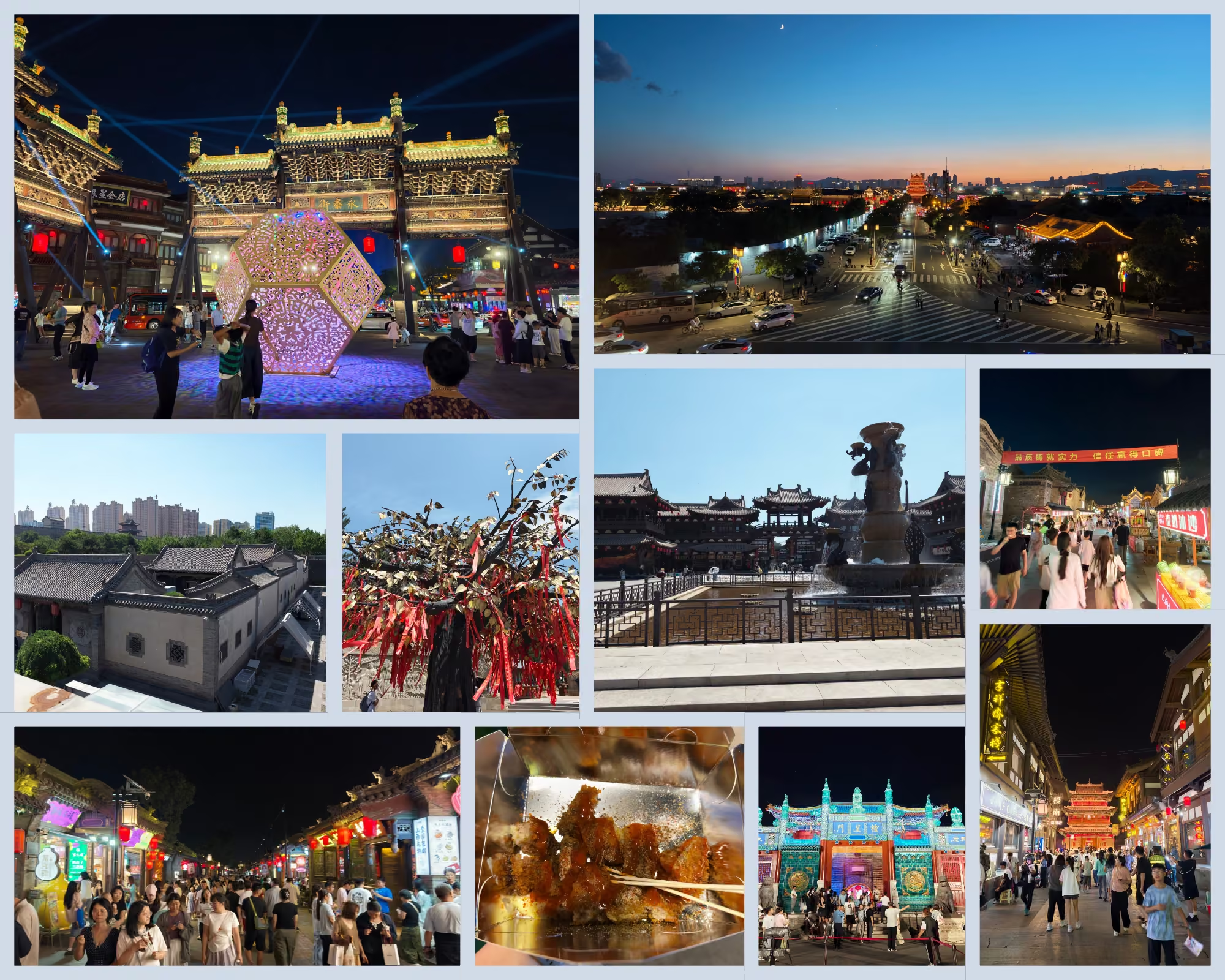
I settled down next to Datong ancient town and next to the tourist bus stop, a completely refurbished tourist hot spot within the old walls. Brightly lit shops surround street vendors and pedestrians, as all sorts of regional goods were being sold.
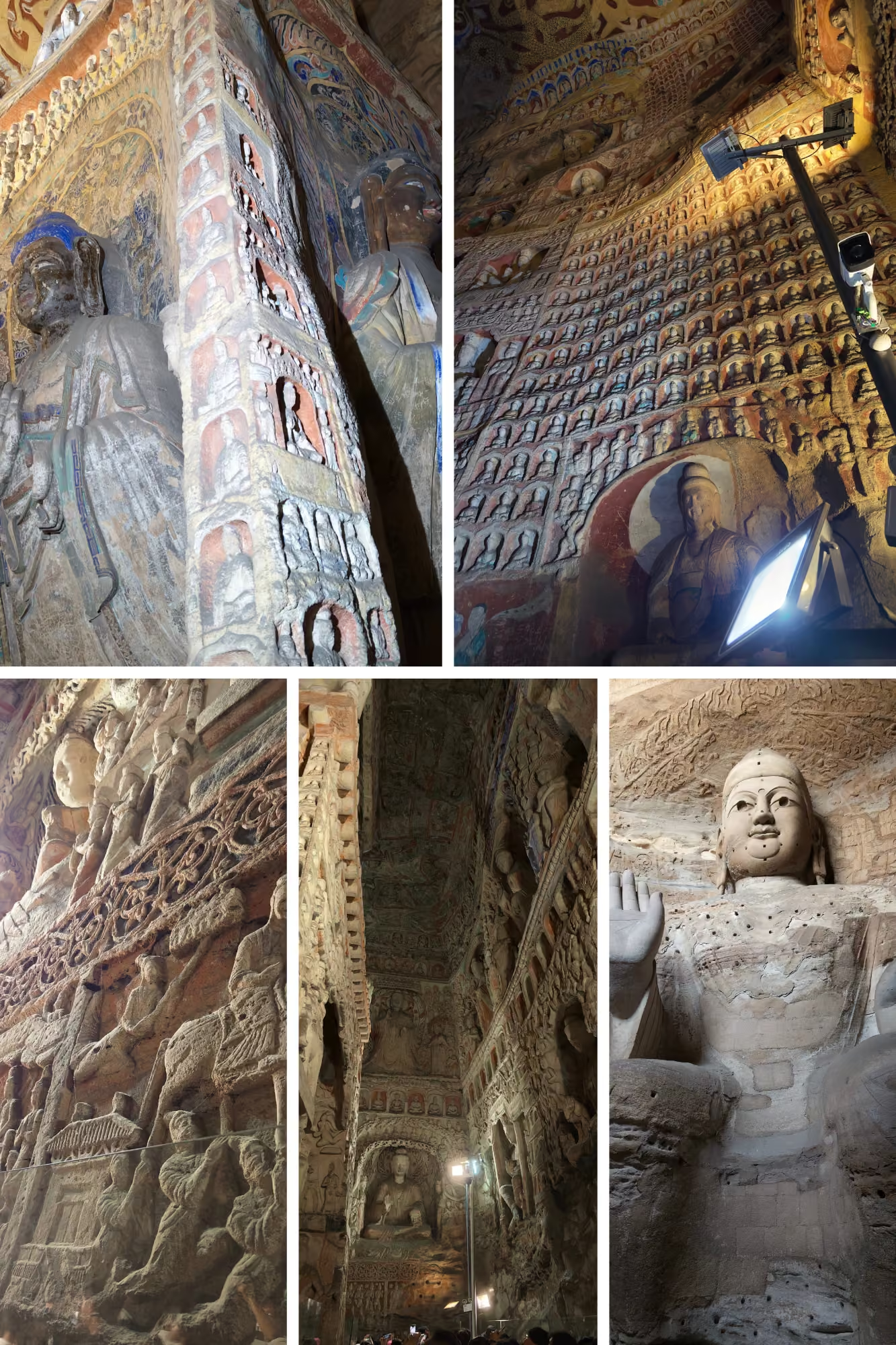
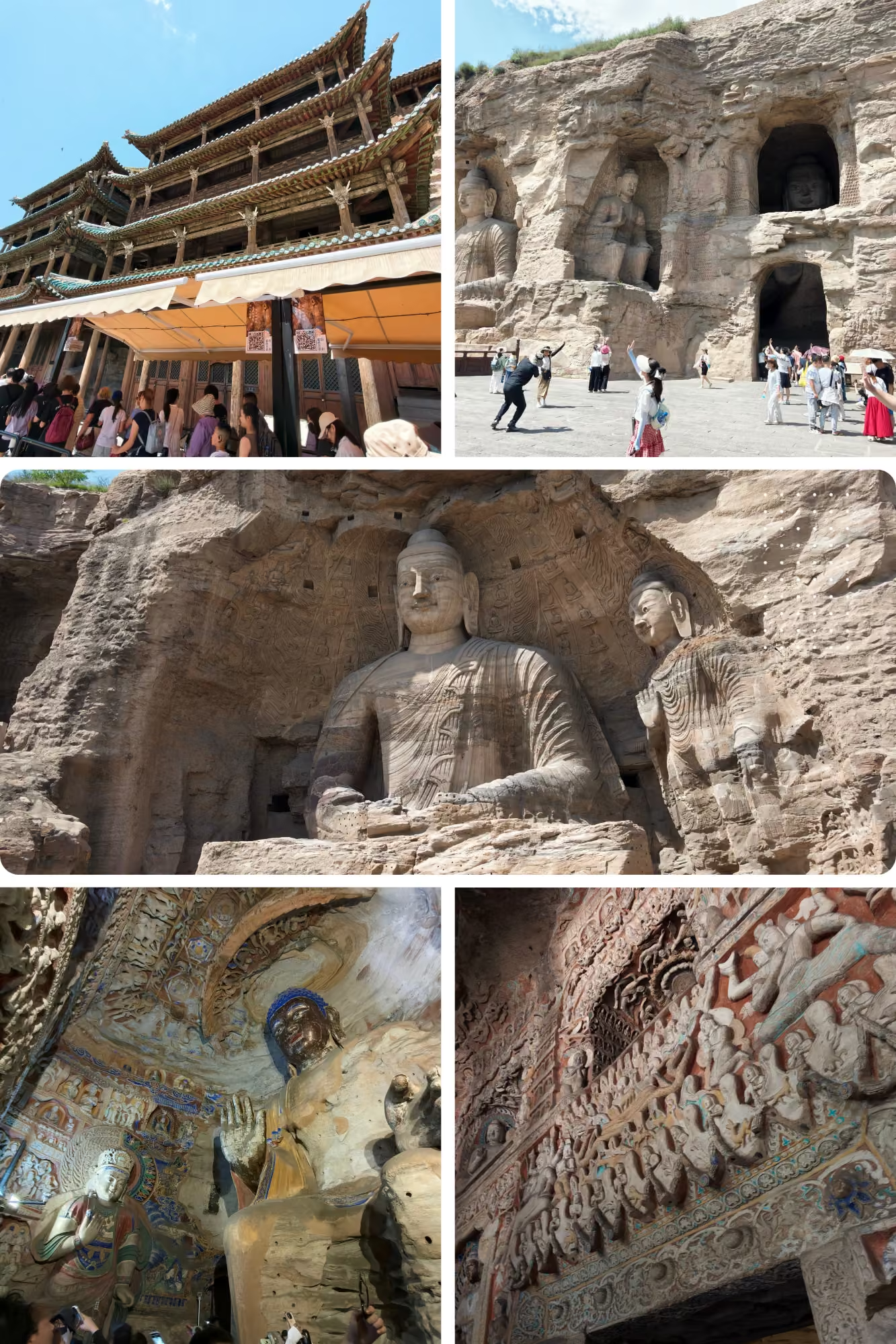
Finally, the Yungang (云冈) Grottoes are a series of large stone carvings dedicated to Buddhist worship. A masterclass in artistry and breathtaking in person, I bought a digital guide and listened to the history while admiring this:
Tianjin 天津
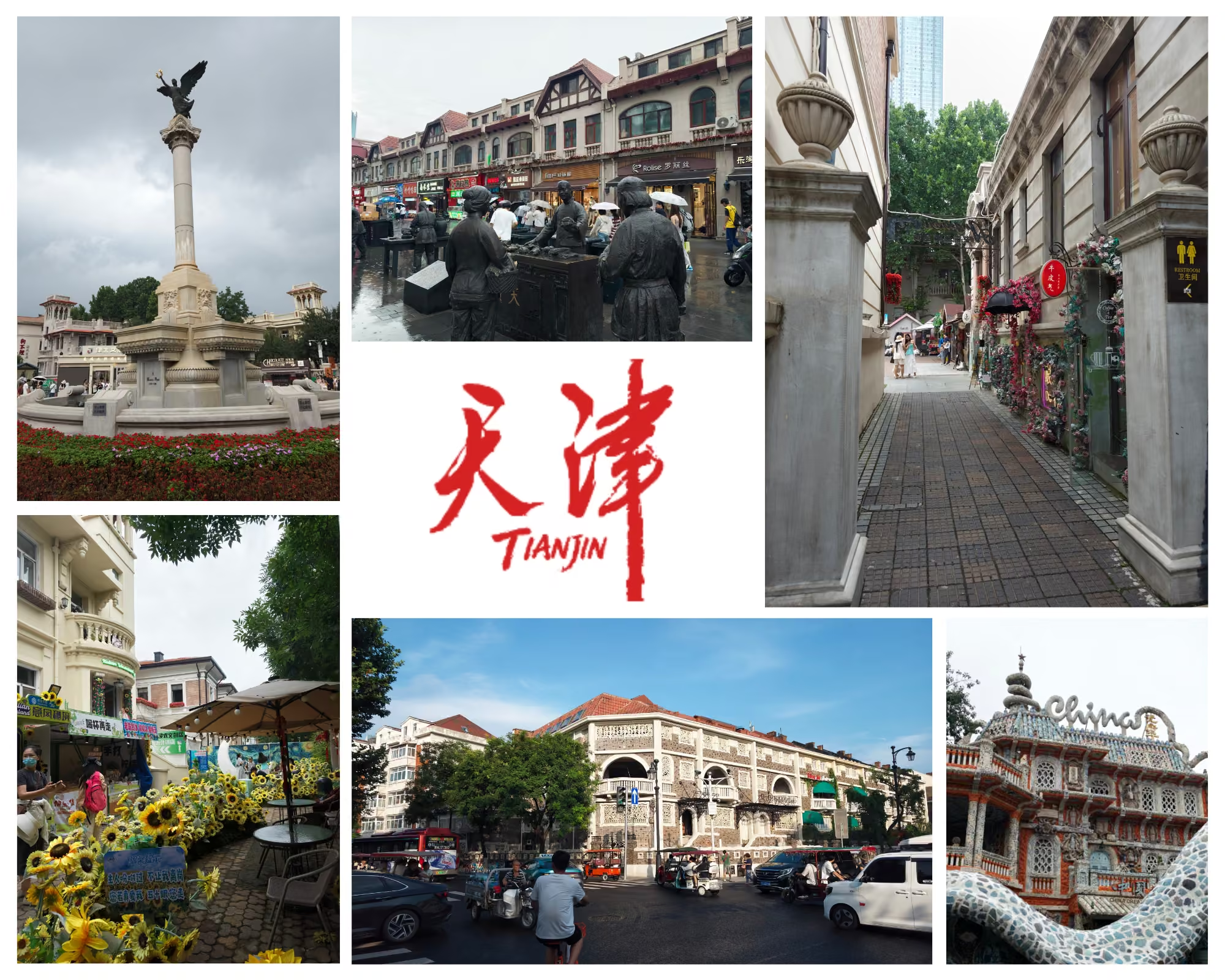
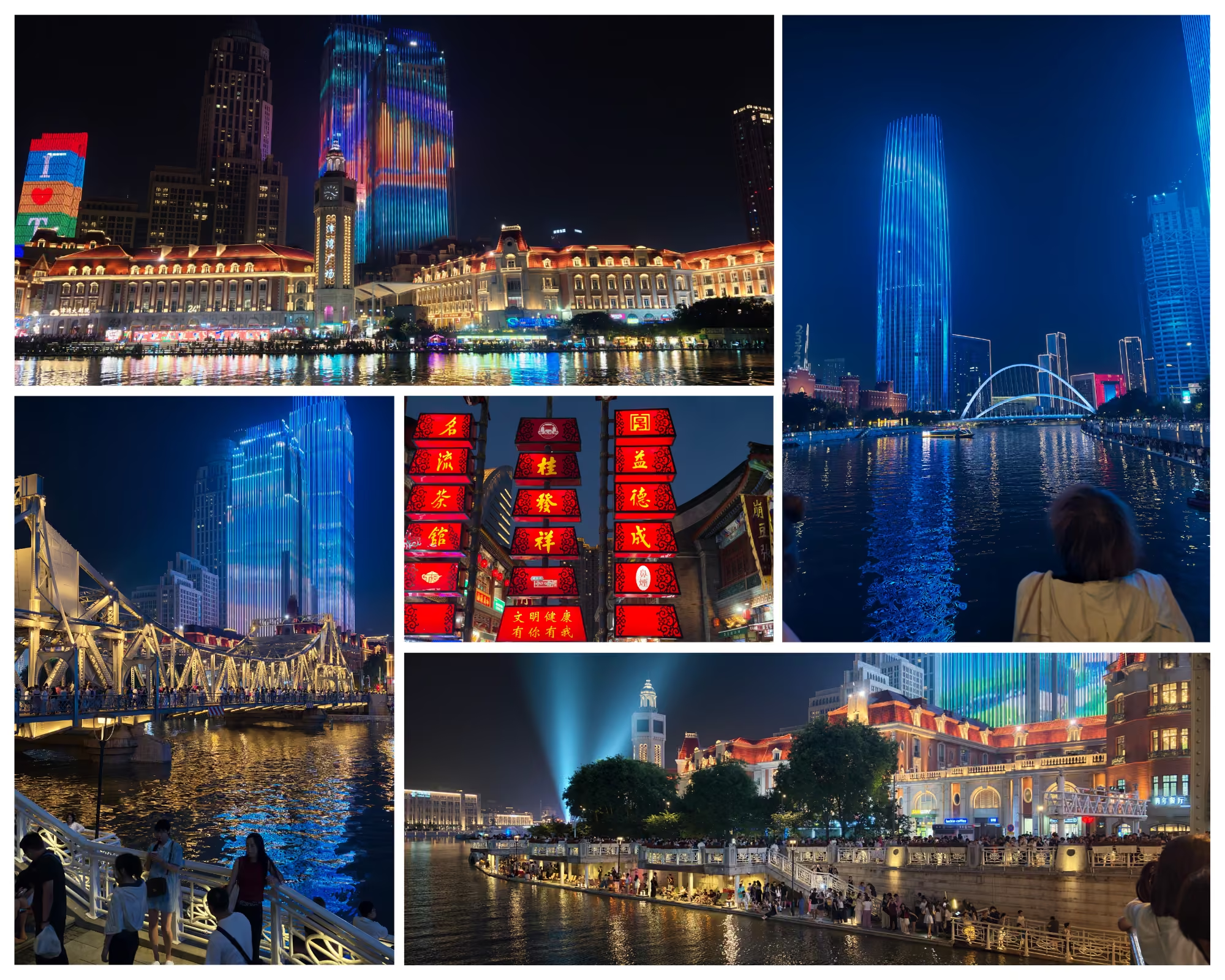
Despite its short distance from Beijing, Tianjin has a unique blend of European architecture, local delicacies, and a relaxed atmosphere. Walking out of the train station to little Italy, crossing through the horse racing coliseum to see the Church, Tianjin is best experienced by walking the streets and living the local life.
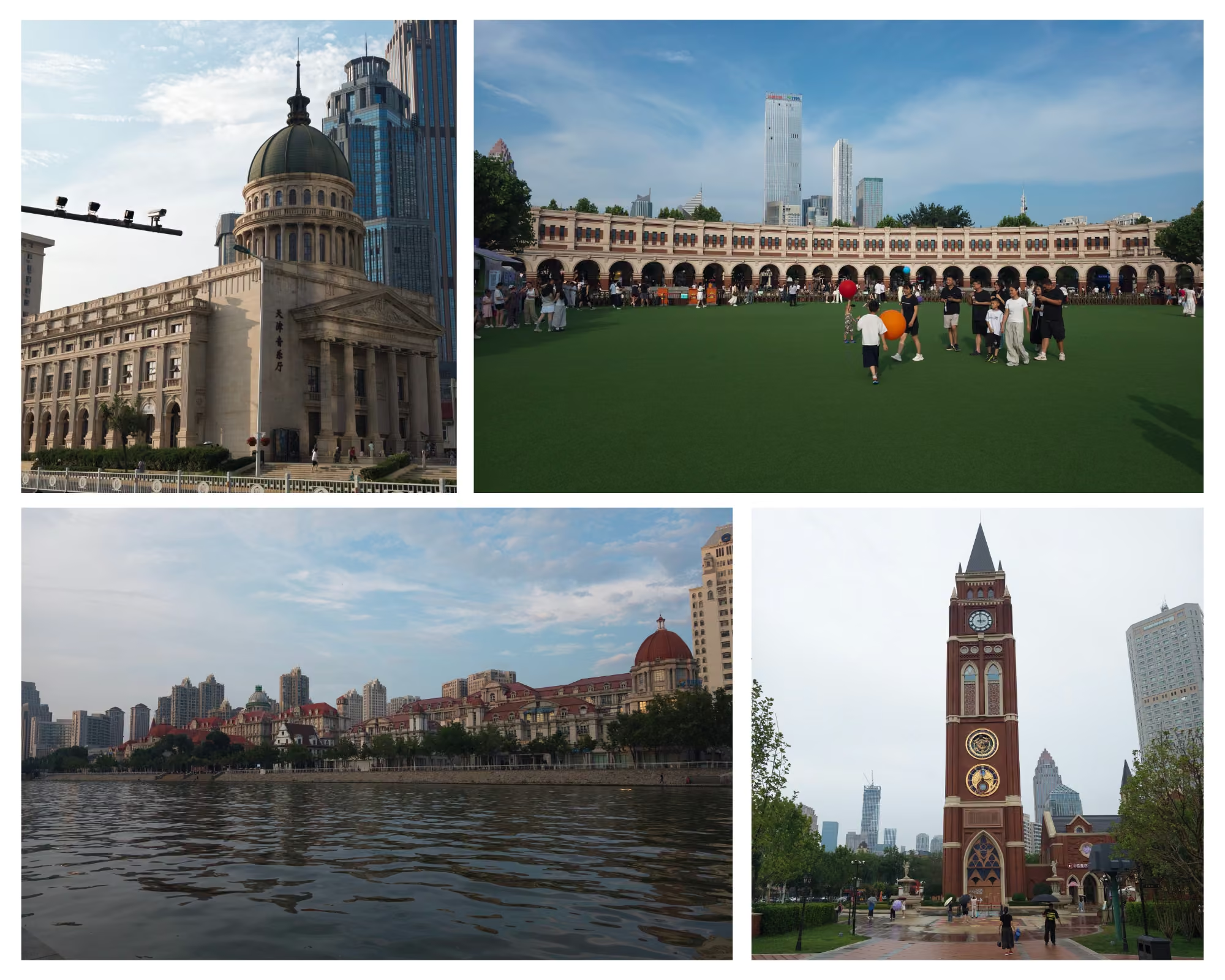
Even the nightlife felt more European. Watching old couples waltz and tango in the street, karaoke setups in the streets, and the downtown district absolutely packed with tourists and young people.